Zhuāngzǐ’s Dream
A ‘reinvention of traditional Chinese theatre’ by a talented student cohort from Beijing’s Central Academy of Drama.
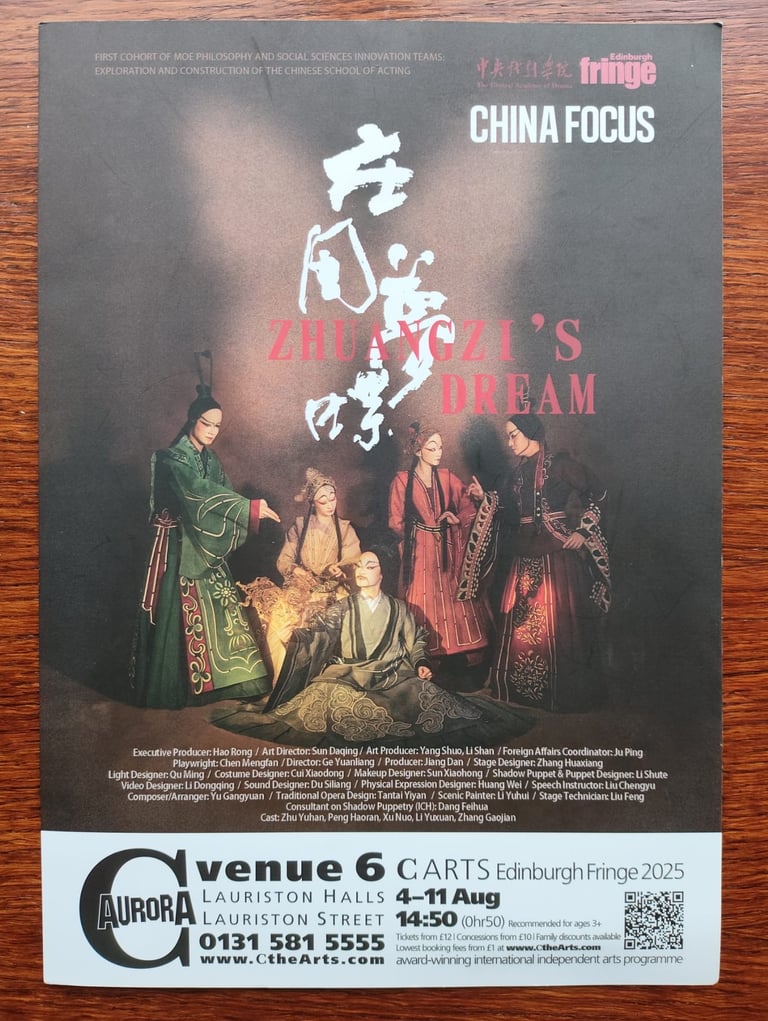
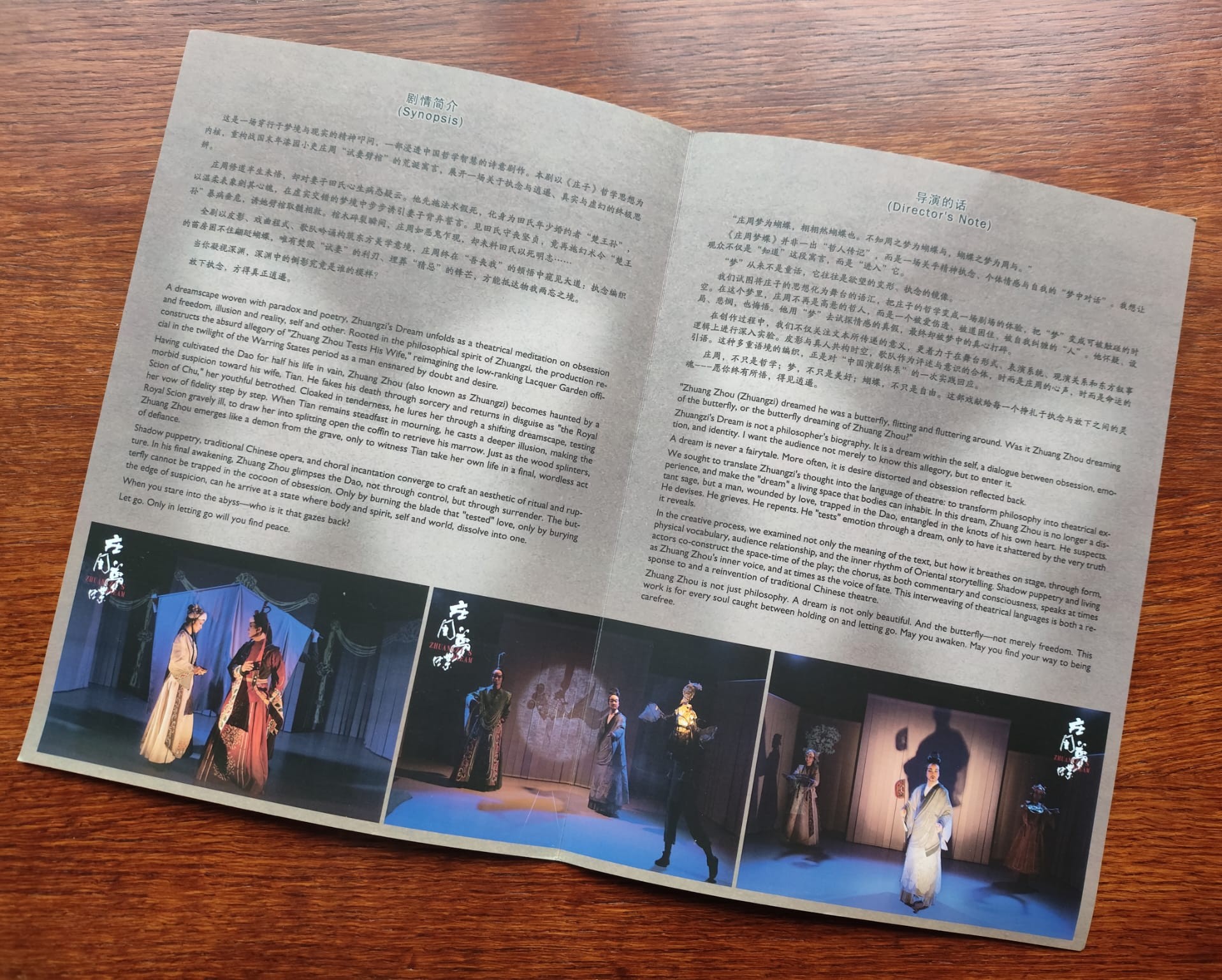
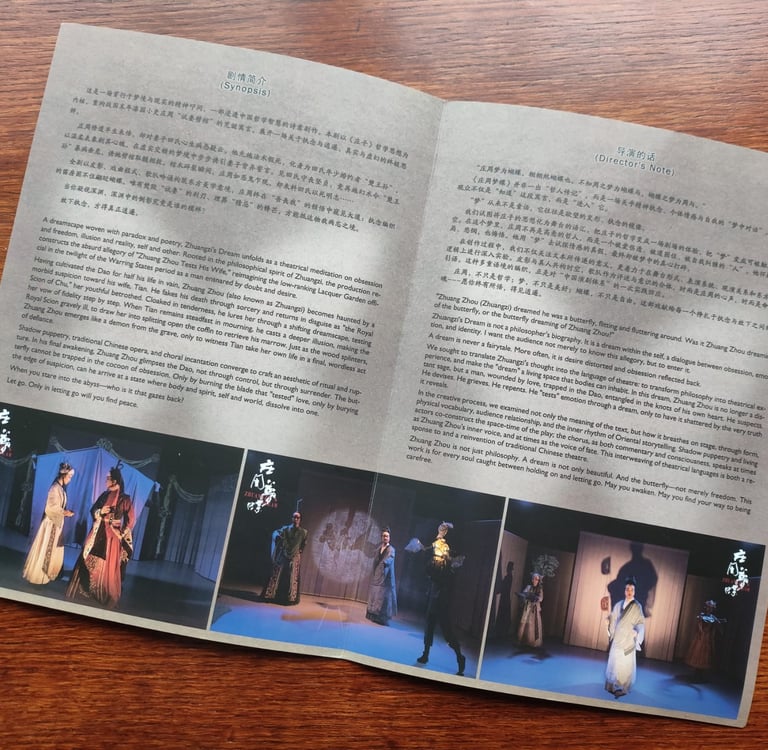
Brought over from the other side of the world, Zhuāngzǐ’s Dream brings the folktale Zhuāng Zhōu Tests His Wife to the stage in Edinburgh. Performed in Mandarin by a superb cast of 5 students from The Central Academy of Drama, Beijing, the audience doesn’t need to understand the language to become fully immersed in this paradoxical dreamscape of love and suspicion, tests of loyalty and heartbroken sacrifice – although if you do want to know what’s being said, don’t worry, there’s live subtitles projected on the top of the central ‘curtain screen’.
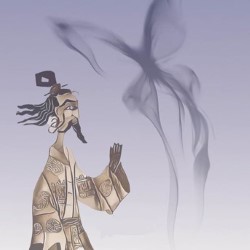
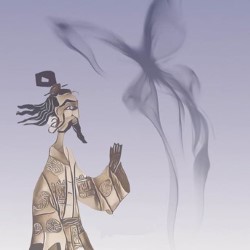
Set in the Waring States period (which took place from 475 to 221 BC for those not in the know) during which the real-life Daoist philosopher Zhuāng Zhōu (also known as Zhuāngzǐ) lived, Beijing’s Central Academy of Drama uses the language of avant-garde and physical theatre to create and then deconstruct a philosophical classic: The Butterfly Dream. Found in the second chapter of The Zhuāngzǐ, one of the foundational texts of Chinese philosophical literature, The Butterfly Dream questions the distinction between states of being with Zhuāng Zhōu writing that there is inherently a difference, this being the ‘transformation of things’ – an awareness of the distinction that exists amongst things – between reality and illusion.
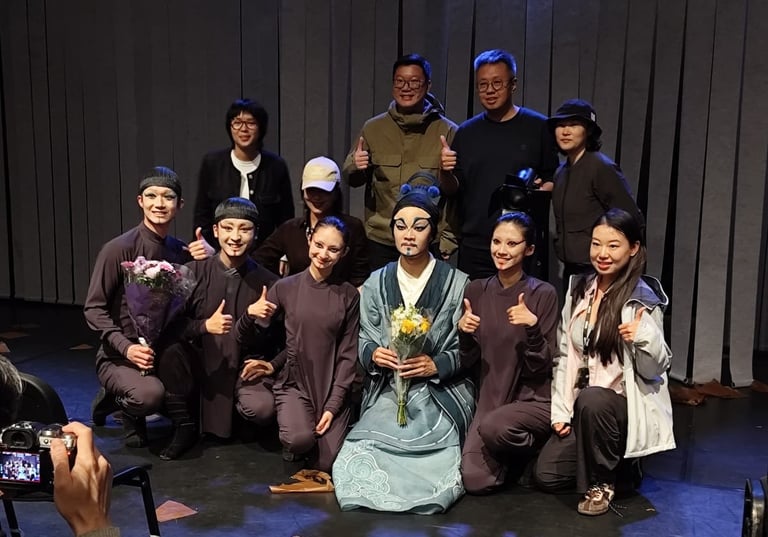
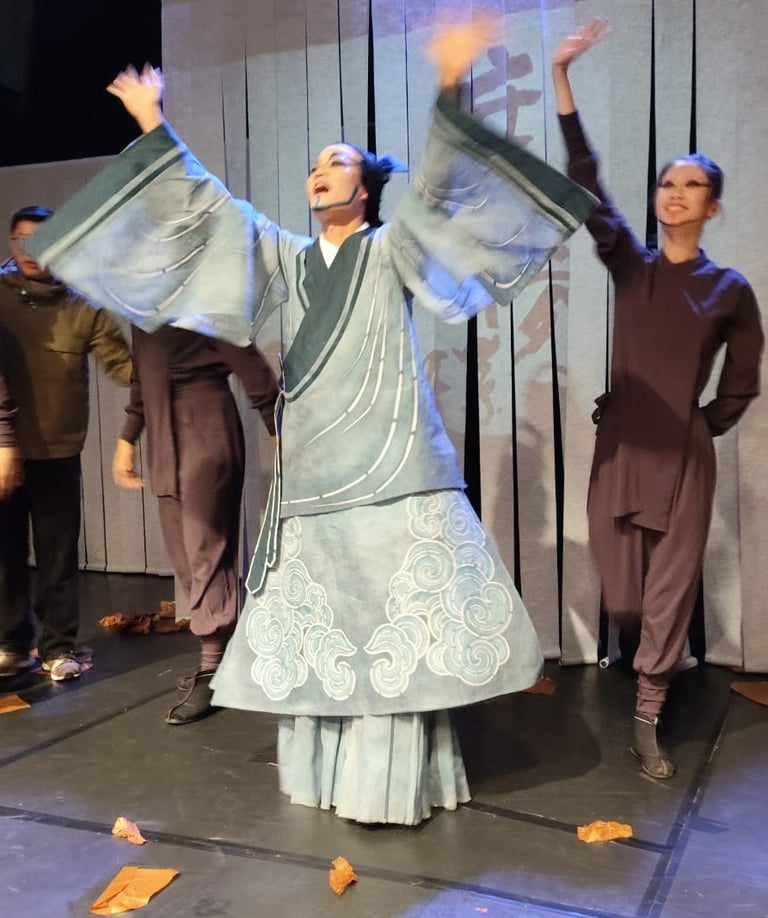
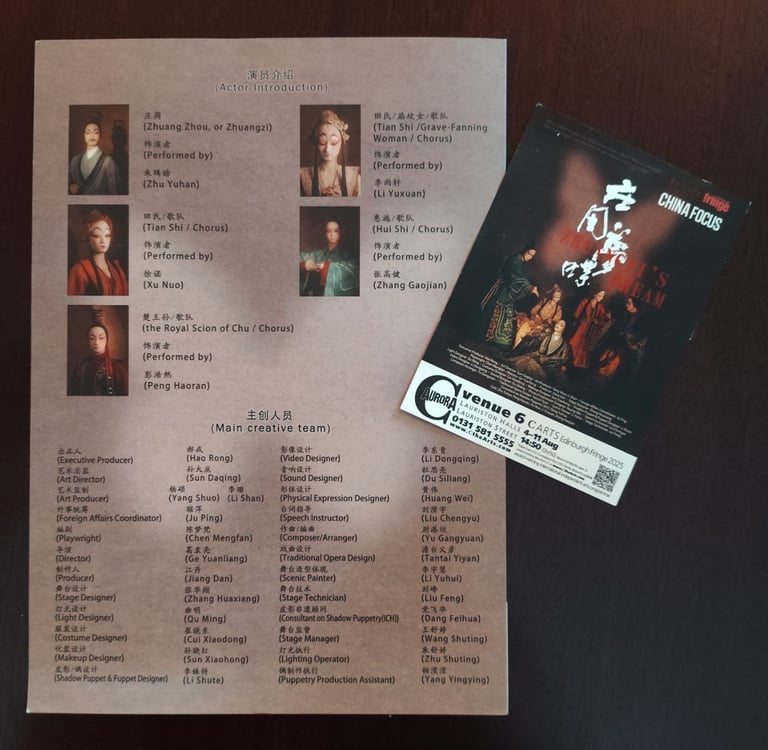
In Zhuāngzǐ’s Dream Zhuāng Zhōu (performed by Zhu Yuhan) uses sorcery to fake his death, separating his spirit from his physical body and moving it to the body of another man, the Royal Scion of Chu (performed by Peng Haoran), the former fiancé of his wife Tian Shi (Xu Nuo and Li Yuxuan) to test her. Now Zhuāng Zhōu is at once himself and not himself, he is the Scion of Chu, and yet he is not the Scion of Chu thus he creates his own paradox of being, both living and dead, mourned and scorned, loved and yet not loved. This displacement pushes him to continue his charade until he once again win Tian Shi’s affections and thus ultimately creating the tragedy that is Zhuāng Zhōu Tests His Wife. Does Tian Shi love him, or the Scion of Chu? Does her moving on after his ‘death’ mean she is unfilial? Did she ever love him? Or is she loyal, able to recognise and fall in love once more with his spirit now residing in the Scion of Chu’s body? Ultimately the audience is asked, ‘how does one prove existence?’ (program).
A ‘reinvention of traditional Chinese theatre’ (program) Zhuāngzǐ’s Dream is a powerful piece put together by a talented cohort of young creatives that do Beijing’s Central Academy of Drama proud and is beautifully performed by cast of some of the strongest voices at the Fringe. Li Shute’s shadow puppets are each intricately cut masterpieces in their own right and – when combined with the actors ability to handle them – are emblematic of the long standing theatre tradition from which they come. By utilising shadow puppetry, choral incantation, and actors performing in the style of Peking opera director Ge Yuanliang has staged a captivating piece of ‘dialogue between obsession, emotion, and identity’ (program) effortlessly interweaving the dream realm of Zhuāng Zhōu’s thought process with the reality he is a part of and irrevocably changing.
Attended 11th August 2025
Edinburgh FRINGE: Venue 6
Lauriston Hall
Zhuangzi dreamed of being a butterfly
Or perhaps the butterfly dreamed of being Zhuangzi.
One body so easily transformed into another one
Ten thousand things change into a myriad of things.
Executive Producer:
Hao Rong
Art Producer:
Yang Shuo, Li Shan
Producer:
Jiang Dan
Writer:
Chen Mengfan
Director:
Ge Yuanliang
Art Director:
Su Daqing
Composer:
Yu Gangyuan
Speech Instructor:
Liu Chengyu
Stage Manager:
Wang Shuting
Tech team:
Liu Feng, Zhu Shuting, Yang Yingying
Cast:
Zhu Yuhan, Li Yuxuan, Xu Nuo, Zhang Gaojian, Peng Haoran
Stage design:
Zhang Huaxiang
Lighting design:
Qu Ming
Sound design:
Du Siliang
Video design:
Li Dongqing
Opera design:
Tantai Yiyan
Costume design:
Cui Xiaodong
Makeup design:
Sun Xiaohong
Physical expression design:
Huang Wei
Puppet design:
Li Shute